Mixer Repair Services

KitchenAid Mixer
Grease Change

Adelaide’s only repairer using NSF H1 food-safe grease — the highest classification for food-industry lubricants. Not the H2 grease sold by KitchenAid spare parts outlets.

We use NSF H1 Food-Safe Grease — the only KitchenAid repairer in Adelaide that does
Maintenance

When Do You Need
a Grease Change?

KitchenAid recommends changing your mixer grease once a year — though how often you actually need it depends on how hard you work your machine.

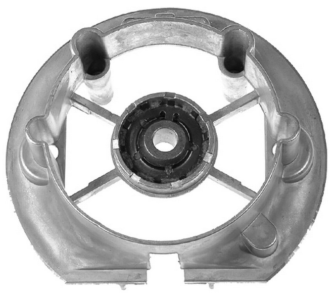
The clearest sign that it’s time is oil leaking from the Planetary Ring — the chrome ring around the attachment hub. When the grease liquefies from heat and use, it finds its way out through any gap it can.

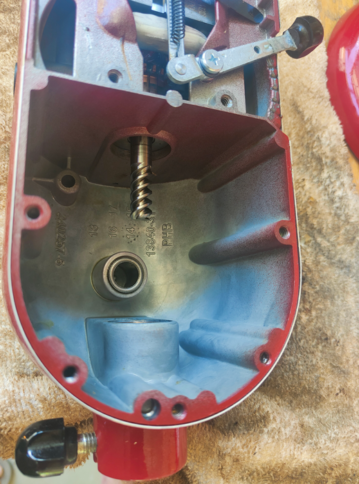
The grease volume shown in the factory images on this page is typical of what comes out of the box. It is often less than what we consider adequate, and placement matters as much as volume.

Warning: It is not uncommon for liquefied gearbox grease to drip into the mixer bowl during use. This is exactly why the grease classification matters — H1 is safe if it reaches your food. H2 is not intended for that.
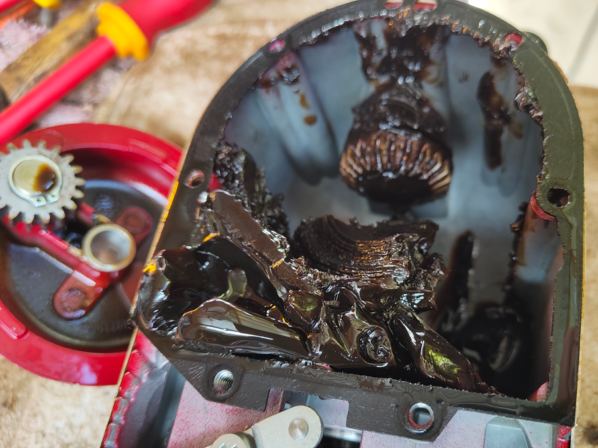
KitchenAid gearbox showing grease condition
Grease Classification

Not All Greases
Are Equal

H1 — What We Use

Food-safe lubricants for use in areas where incidental food contact is possible. Safe even if it makes its way into your mixing bowl. The highest food-grade classification.

H2 — What Others Use

For machinery with no possibility of direct food contact — like a forklift. The current KitchenAid spare parts grease (W11200218) is H2. Not what you want near food.

H3 — Edible Oils

Soluble or edible oils used to prevent rust on hooks, trolleys and similar equipment. Not relevant to mixer gearboxes.

A Brief History of KitchenAid Gearbox Grease

The original dark grease used by KitchenAid was MicroLubrol™ Gear and Bearing Grease. Questions were raised about whether it was food safe — we’ve not been able to confirm either way.

KitchenAid then moved to a white grease for the planetary gears, which many assumed was H1 food-safe. It was almost certainly H2. When MicroLubrol™ supply dried up, many repairers began using this white grease throughout the gearbox — it’s food-safe if it leaks, but it has poor lubricating properties and we recommend replacing it sooner rather than later.

The current KitchenAid branded grease sold at local spare parts outlets (W11200218) is an H2 grease. We do not use it.

The Service

What’s Included in
a Grease Change?

A proper grease change is more than just topping up the gearbox. We disassemble the relevant components, clean the old grease out completely, inspect for wear or damage, and repack with the correct volume of H1 food-safe grease in the right locations.

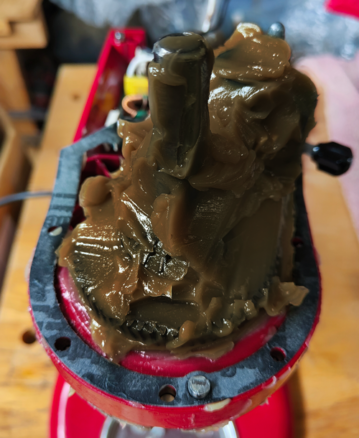
Volume and placement both matter significantly. The factory application is often on the light side and inconsistent — we apply what we consider to be the correct amount for long-term protection.

We don’t publish our pricing here — competitors have a habit of adjusting their offers once they see ours. Contact us for a quote.

KitchenAid gearbox upper — grease application
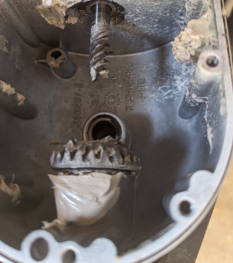
KitchenAid gearbox lower — grease application
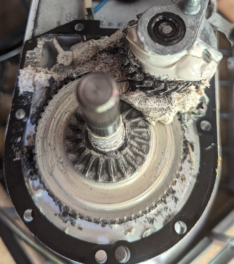
Note: The grease images on this page are representative of quantity and placement — not exact. Factory amounts vary; we apply what the machine actually needs.
White grease factory application upper gearbox
White grease factory application lower gearbox
White Grease Warning

Got White Grease
in Your Mixer?

The white grease visible in many KitchenAid gearboxes was originally intended for the planetary gears only. When MicroLubrol™ supply dried up, many repairers began using it throughout the entire gearbox as a substitute.

White grease is food-safe (it’s likely H1), so a leak into your bowl isn’t a health hazard. However, its lubricating properties are poor — it’s not designed to protect a full gearbox under load over time.

Our recommendation: If your mixer has white grease throughout the gearbox, change it sooner rather than later. The protection it provides is significantly inferior to a proper H1 gear grease.
What to Expect

After the Repair

Your mixer will smell of grease and oil when you get it back. This is completely normal — mixers are disassembled, cleaned in chemical solution, then repacked with fresh grease and oil. The smell fades over time with use.

If we’ve re-oiled your armature bush wicking pad, you may notice a small amount of oil weeping from the base of the mixer over the days following the repair. This is also normal — the wicking pad is designed to hold oil and release it gradually to lubricate the armature shaft. Wipe it up with a paper towel and continue using your mixer.

Oil Weeping

Small amounts of oil may appear under the stand in the days after repair. Wipe with a paper towel — it will settle down.

The Smell

Fresh grease and oil has a noticeable smell. It’s not harmful and fades with normal use over time.

KitchenAid armature bush wicking pad

The armature bush wicking pad — re-oiled during a grease service.

Here’s What You Do

Drop Off Your Mixer

We use Kennards Self Storage Panorama as our 7-day parcel point. Think of it like dropping a parcel at the post office — Kennards staff accept your mixer on our behalf. We are not on site.

1
Box It Up

Pop your mixer, bowl and beater in a box with your name, mobile number and a description of what you need done.

2
Drop It In

Drop off at 617 Goodwood Road, Panorama SA 5041 — go to the Kennards office. Open 7 days.

3
We Text You

We’ll assess your mixer and text you a quote within 1–4 business days. $75 minimum charge applies.

4
Pick It Up

Once complete and paid, we’ll text you. Collect from the same Kennards Panorama location — 7 days.

Licensed Electrician
NSF H1 Food-Safe Grease
Proudly South Australian
Contactless Payment
7-Day Drop-Off

Ready to Get Started?

Drop off your mixer at Kennards Panorama — 7 days a week. We’ll text you a quote within 1–4 business days.